
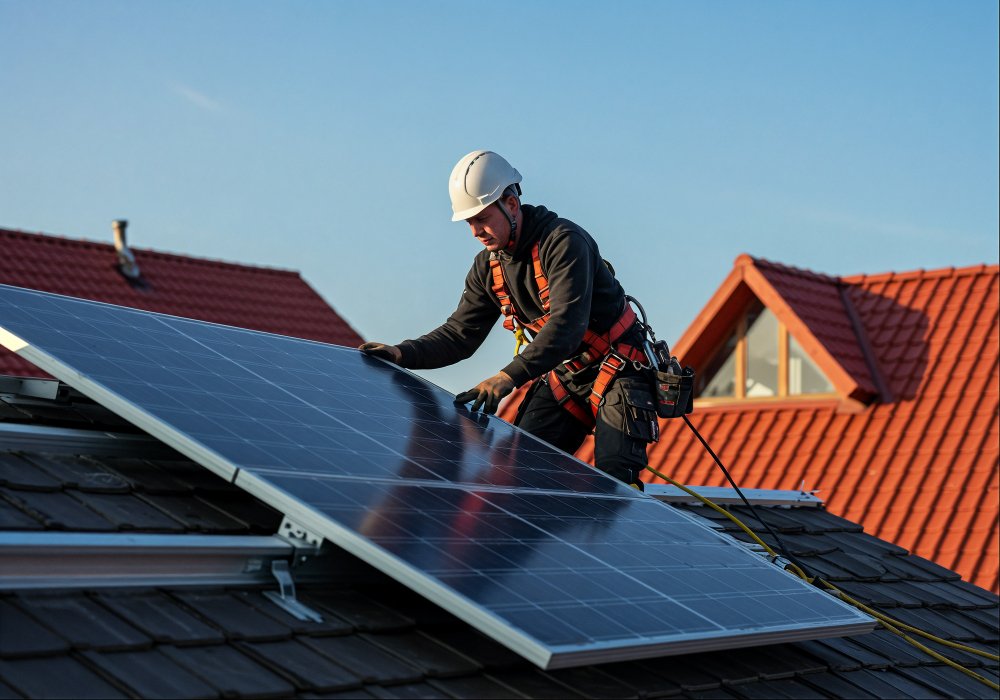
“A solar array can be designed beautifully on paper. The first question is whether the roof beneath that design is ready for it.”
Q: What Should Be Checked Before Solar Panels Are Installed?
A: Start with roof condition. That sounds obvious, but solar planning can become so focused on panel layout and electrical production that the existing roofing system is treated as little more than a platform. The evaluation should consider the roofing material, visible condition, active or previous leaks, flashing, penetrations, drainage, roof geometry, and any signs that suggest substrate or other concealed concerns. Previous repair history is useful as well. A location that has leaked repeatedly deserves attention before it becomes less accessible beneath or near an array. The goal is not to prove that every roof needs work before solar. Many serviceable roofs may not require major roofing work. The goal is to identify conditions that would be easier to address before the solar installation than after it. It is also worth looking beyond the exact panel footprint. Equipment placement, pathways, roof edges, drainage areas, penetrations, and locations that may require future service should be part of the conversation.Don’t evaluate only the proposed panel area. Consider roofing locations that could become more complicated to inspect, repair, or replace after the solar system is installed.
Q: Should You Replace the Roof Before Installing Solar?
A: Not automatically. Roof replacement should be based on the condition and needs of the roofing system, not on a blanket rule that solar always requires a new roof. If the roof remains serviceable and there is no evidence supporting major roofing work, replacement solely because panels are being installed may be unnecessary. On the other hand, if inspection identifies deterioration, recurring leaks, widespread deficiencies, or another condition already pointing toward substantial roof work, it makes sense to resolve that question before the array complicates access. The key issue is sequencing. Imagine installing a solar array and then discovering shortly afterward that significant roofing work is necessary beneath it. The roofing problem now exists alongside a second project: coordinating access to, removal of, protection of, and eventual reinstallation or reconfiguration of solar equipment as applicable.“The best time to discover that a roof needs major work is before the solar array is attached to it.”
Ask for a condition-based roofing recommendation, not a recommendation based solely on roof age. Actual materials, installation, repair history, exposure, and observed condition provide more useful context than one universal lifespan number.
Q: Why Do Solar Mounting Points Matter to the Roof?
A: Because the solar array has to become part of the building without compromising the functions the roof was designed to perform. The exact attachment approach depends on the roofing system, solar mounting system, structural conditions, manufacturer requirements, and project design. But conceptually, every attachment or interface deserves attention because it creates a relationship between the solar equipment and the roof assembly. That relationship has several dimensions. The attachment must perform its intended structural role. The roofing detail must continue managing water. Components must be compatible with the applicable roof and solar systems. The design must also account for the particular configuration of the roofing material rather than assuming that one mounting detail works identically everywhere. This is where coordination between roofing and solar becomes valuable. A solar contractor may be focused on the array. A roofer may be focused on the building envelope. The property owner benefits when those priorities meet before installation rather than after a problem appears. A mounting point is small in area but large in responsibility.Before installation, clarify who is responsible for roof-related attachment and waterproofing details and how those details coordinate with requirements for both the roofing and solar systems.
Q: Can Solar Panels Cause Roof Leaks?
A: It is more accurate to say that solar installation introduces new roof interfaces that must be integrated correctly. A leak occurring after solar installation should be diagnosed rather than automatically blamed on the panels themselves. The source could involve an attachment or flashing detail. It could involve roofing disturbed during installation. But it could also be an existing roof problem, an unrelated penetration, a wall transition, drainage, or another condition that happens to become noticeable after the solar project. The location of an interior stain is not necessarily the exterior entry point either. Water can move within an assembly before it becomes visible inside the building. That is why the first response should be investigation rather than assumption. A useful diagnostic question is: What changed? If the leak began after installation, identify work performed near the affected area, but also examine surrounding roof conditions and potential water paths. The timing is evidence; it is not proof by itself.Diagnose before assigning responsibility. Determine the likely entry point and failure mechanism before deciding whether the solar installation, an existing roof condition, or another building detail is involved.
Q: What Happens If the Roof Needs Repair Under Solar Panels?
A: This is where planning before installation proves its value. Once solar equipment occupies part of the roof, certain roofing work may require additional coordination. Depending on the location and scope of the repair, access may involve solar equipment that cannot simply be treated like loose rooftop furniture. Qualified personnel may need to address electrical and solar components as appropriate, and the roofing contractor may need sufficient access to inspect and repair the underlying assembly correctly. This can create sequencing questions: Who handles the solar equipment? What portion needs to be made accessible? How is the roof protected during the process? Who confirms that the solar system is returned to its appropriate configuration afterward? None of this means solar and roof maintenance are incompatible. It means the array changes the logistics of accessing certain parts of the roof.“Solar does not eliminate future roof maintenance. It makes future access part of today’s design conversation.”A thoughtful project anticipates that the roof and solar system may need service at different times. The next step is understanding how replacement, different roofing materials, Lake Tahoe conditions, and project documentation fit into that long-term relationship.
Q: How Should Solar Installation and Roof Replacement Be Coordinated?
A: The most efficient sequence begins before either installation crew starts working. If the roof needs replacement and solar is planned, the roofing scope and solar design should be reviewed as related parts of the same exterior project. A useful planning sequence looks like this: Roof Evaluation → Roofing Scope → Solar Design → Attachment Coordination → Installation → Documentation The roof evaluation establishes the condition of the existing assembly. If replacement or substantial corrective work is justified, that scope can then be defined before final solar installation. The solar layout can be coordinated with the roof geometry, relevant penetrations, drainage features, and the attachment approach for the selected roofing system. This sequencing can also clarify responsibility. Property owners should understand which contractor is responsible for roofing work, solar components, attachment details, applicable flashing or waterproofing work, and any later service that affects both systems. When the projects are treated independently, one contractor may finish work without complete visibility into what the next contractor intends to change. Coordination helps reduce that disconnect.If roof replacement and solar installation are both planned, coordinate the scopes before either project begins. It is easier to resolve roof interfaces on paper than after new roofing and solar equipment are already in place.
Q: Does the Type of Roof Change Solar Installation Planning?
A: Absolutely. Solar mounting should respond to the roofing system rather than treating every roof as the same attachment surface. Composition roofing, metal roofing, and tile roofing present different configurations and detailing considerations. Even within those broad categories, products and assemblies can vary. With composition roofing, the condition of the existing roof and the integration of attachment details deserve attention. On metal roofing, panel profile, seam configuration, attachment method, and intended movement can influence planning. Tile roofing introduces its own considerations because the tile profile, access, handling, underlying assembly, and mounting strategy must be understood. That does not make one roofing material universally superior for solar. The more useful question is whether the proposed mounting and water-management approach is appropriate for the specific roof. Roof geometry matters too. Valleys, intersecting slopes, skylights, vents, chimneys, walls, and other interruptions influence the usable roof area and create details that should remain part of the roofing conversation even when the primary objective is solar production.“The solar system should adapt to the roof beneath it—not force every roof into the same installation logic.”
Q: What Should Lake Tahoe Property Owners Consider Before Installing Solar?
A: Start with the property, not with a generic regional rule. For homeowners considering Solar Panel Installation in Lake Tahoe, project planning may need to consider roof geometry, site elevation and exposure, seasonal snow and ice conditions where relevant, drainage, structural requirements, roofing materials, solar equipment placement, access, applicable codes, and manufacturer requirements. The important phrase is project-specific. A simple roof plane and a complex multi-level roof do not present identical design questions. Properties can also differ in orientation, surrounding obstructions, exposure, roofing system, structure, and existing rooftop equipment. Snow-related design is an especially good example of why generic internet numbers should not replace professional project evaluation. Applicable structural and code requirements should be confirmed for the actual property and proposed system. Solar equipment can also change how snow, water, and roof access interact with particular areas of a roof. Those relationships should be evaluated as part of the design where relevant rather than assumed to behave identically on every property.Do not use a generic online snow-load figure to design a roof or solar system. Confirm applicable structural, code, manufacturer, and project requirements for the specific Lake Tahoe property.
Q: What Documentation Should You Keep After Solar Installation?
A: More than most property owners expect. The roof and solar array may remain together for years, while the contractors, property owners, equipment, and future service providers around them can change. Documentation becomes the memory of the project. A useful project file can include:- roof inspection or condition information available before installation;
- photographs of relevant roof areas before solar work;
- records of roofing repairs or replacement completed beforehand;
- solar layout and relevant system documentation;
- available information about attachment and roof-integration details;
- product and manufacturer information;
- applicable roofing and solar warranty documents;
- contractor contact information;
- completion photographs;
- records of future roof or solar service.
Create one property file for both roofing and solar records. Future roof work may affect solar, and future solar work may affect roofing. Keeping the histories together preserves the relationship between the two systems.
Final Perspective: Treat the Roof and Solar Array as One Long-Term Decision
The most important lesson from solar roofing is not that every roof needs replacement before panels are installed. It does not. Nor is it that solar inevitably creates roofing problems. Properly planned projects are built around integration. The lesson is that a roof and a solar array begin sharing consequences the moment the two systems are connected. If roofing beneath an array later requires substantial work, solar access becomes part of the roofing project. If an attachment or rooftop component is modified, roof integration becomes part of the solar project. If a leak develops, diagnosis may require understanding both systems rather than looking at either one in isolation.“Solar panels may generate the power, but the roof carries the relationship.”That relationship is easiest to manage when it begins with a roof-condition evaluation, continues through coordinated design and installation, and ends with documentation that future contractors can actually use. Ask whether the roof is ready. Ask how attachments will integrate with the roofing system. Ask what happens if future repairs require access beneath the array. Ask who is responsible at the interface between roofing and solar. And preserve the answers after construction is complete. The best solar roofing project is not simply the one that installs panels successfully. It is the one that leaves the roof, attachments, drainage, documentation, and future service access working as a coordinated system.